Blog

The Simplicity of Realism
In this post, I want to share some thoughts about realism and abstraction. Mainly because I'm wrangling with this one myself, and it might help me if I write about it!
The visual pinnacle of realism is so-called "photo-realism". Paintings that look like photographs. It's heard all the time isn't it? "Wow - that painting looks just like a photograph", meant as a compliment. Unfortunately, it isn't - well, not really.
As my teacher Martin Kinnear at Norfolk Painting School says, "you can copy anything as long as you have enough time, paint, and a small enough brush". That includes a photograph. You copy it, and keep copying it until your painting looks like the photograph. Unquestionably, it's a skill, but I would argue (as does Martin) that it's one that is mostly redundant. Why not simply print the photograph out, and save all that time and effort?
Continuing this line of investigation, then, art has to offer more - whatever that "more" happens to be> The nature of that "more" is determined by the artist.
Here are two images of roosters. One by Picasso on the left, and a really lovely drawing I found online by an artist called Lisa Molitor (I'm guessing, going from the signature).
Lisa's drawing looks like a rooster, similar to how a photograph would; by contrast, Picasso's looks, feels and even sounds like a rooster!


Don't get me wrong, Lisa's drawing is exquisite. Wonderful skill, and the tonal modelling on the forms are great. But now we have cameras, I believe art has to push into new territory. Again to quote Martin Kinnear, "Illustration is the neutral conveyance of visual fact." On that basis, Lisa's drawing is an illustration, whereas Picasso's drawing is art.
That's what I'm pursuing with in these latest paintings - and in fact all my paintings and drawings - to avoid making them look like photographs; to avoid the neutral conveyance of facts. And in so doing, I believe they offer more. They're more "interesting".

Sure, it takes skill and tenacity, but the principle of realism is simple - you keep working at it until it looks like the thing. It can be measured objectively. Does it look like the thing yet? No? Then in what way does it look different? And you proceed by reducing that difference. It's when you move away from that objective world that the problems begin!
Picasso had to caricature to get the result he wanted; and the caricature is moving away from the photographic reality. It has to. If it were tethered in reality, it couldn't move into this new artistic direction. The "art" is in how it doesn't look like a photograph.
Of course, this direction can be taken further until we arrive at total abstraction. We hit another problem at that extremity of the scale, that it often needs explanation or strong titling in order to be relevant to the viewer. Otherwise, it's just a bunch of marks, or pure decoration.
So many great modern artists are riding the wave between realism and abstraction. For example, the so-called "Disrupted Realism" movement typified by Alex Kanevsky, Kai Samuels-Davis, and Christian Hook, as well as the more abstract figurative work of Cecily Brown.
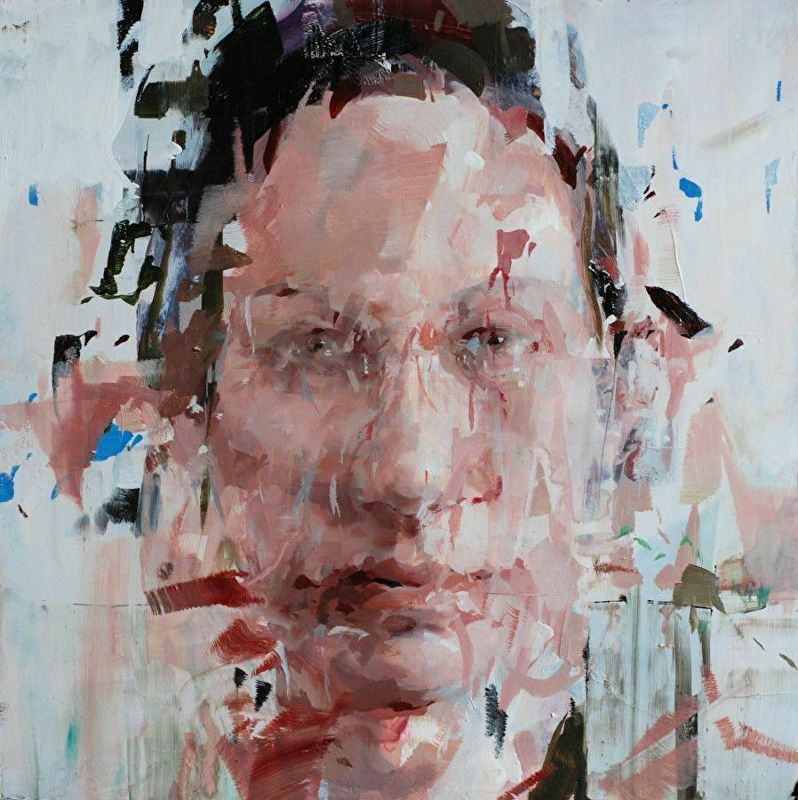

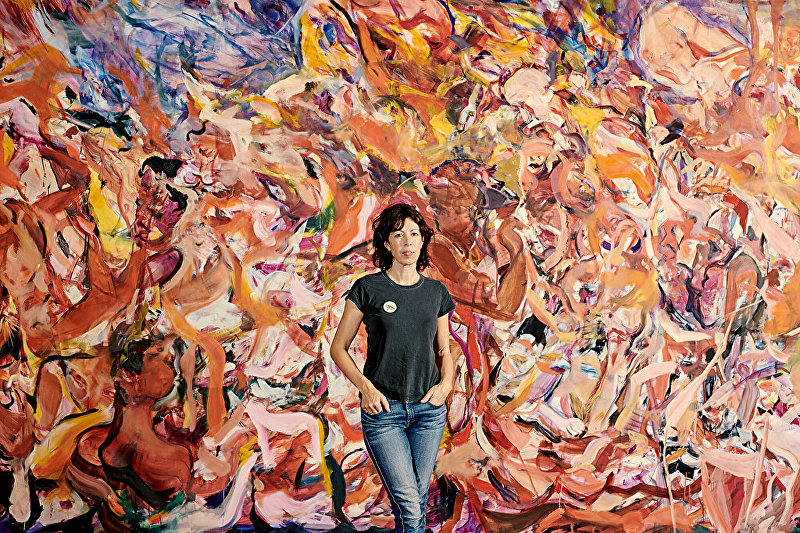
Each of them could create work that looks "just like a photograph", but they choose not to.
And that distinction means that what they do is art.

